Thymus Natural Glandular, from Allergy Research Group, is a vegetarian capsule supplement providing whole thymus tissue sourced from range-grazed, government-inspected ovine (sheep) animals in New Zealand and Australia. The thymus tissue is lyophilized (freeze-dried) to preserve its temperature-sensitive compounds and nutritional value, delivering tissue-specific nutrients and bioactive compounds in each serving.
The thymus gland plays a central role in immune function, supporting the maturation of T lymphocytes (T cells) essential for adaptive immune function and self-tolerance. Thymus Natural Glandular naturally contains thymic peptides such as thymosin and thymopoietin, which are involved in immune cell differentiation and signaling. It also delivers tissue-specific cofactors and nucleic acids that may help support thymus gland homeostasis and cellular renewal.
This traditional glandular preparation is well suited for individuals seeking focused immune system support, particularly those interested in traditional glandulars for T cell function, immune balance, and healthy aging. Thymic activity naturally declines with age, and this product is designed to support immune resilience during that process.
Allergy Research Group sources this product from pasture-raised, government-inspected animals in New Zealand and Australia, regions recognized for their strict animal welfare and agricultural standards. The formula is designated Hypoallergenic and is delivered in vegetarian capsules.
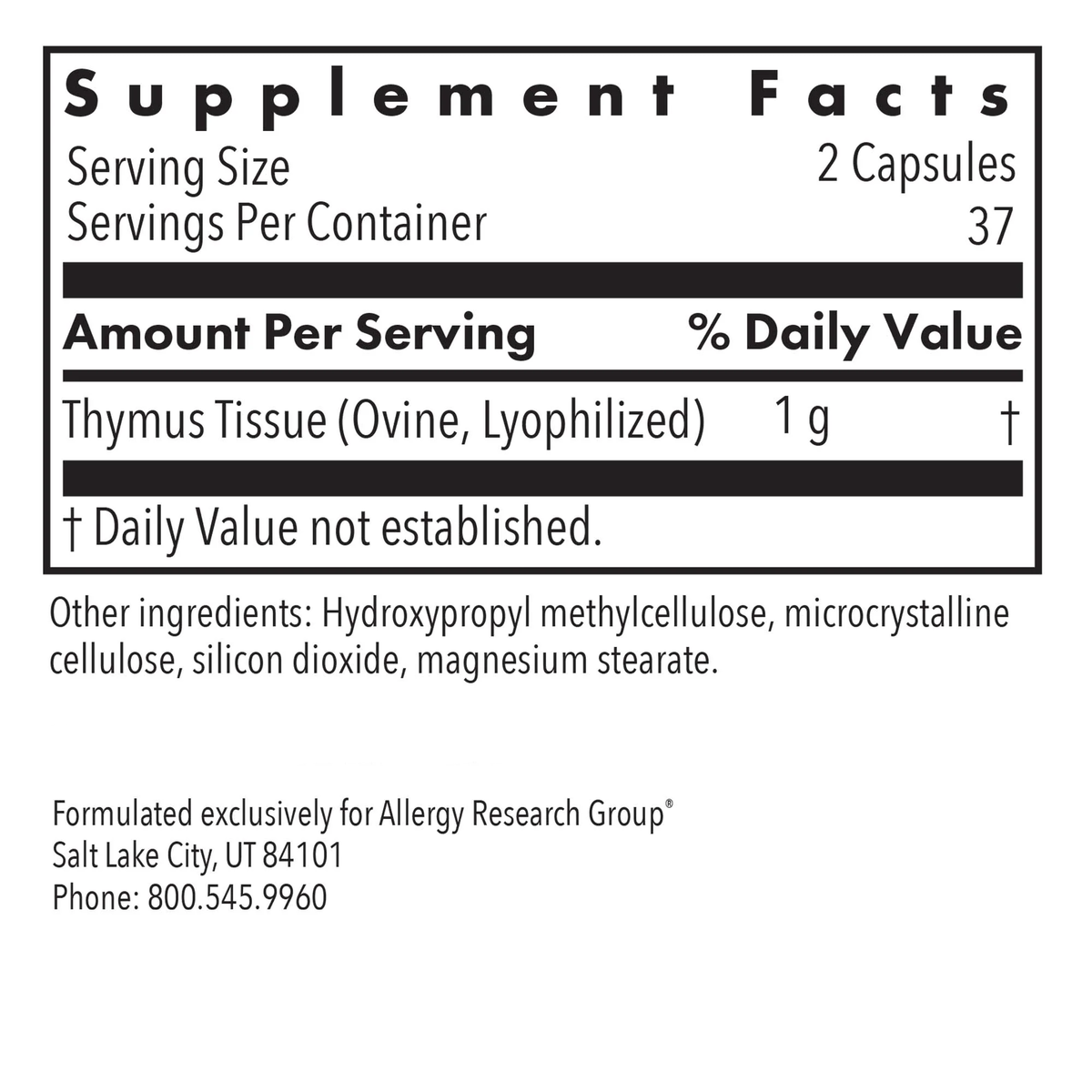
| Supplement Facts | ||
|---|---|---|
| Serving Size 2 Capsules | ||
| Servings Per Container 37 | ||
| Amount Per Serving | %DV | |
| Thymus Tissue (Ovine, Lyophilized) | 1 g | † |
| † Daily Value not established. | ||
| Other ingredients: Hydroxypropyl methylcellulose, microcrystalline cellulose, silicon dioxide, magnesium stearate. | ||
Thymus Tissue (Ovine, Lyophilized) — supports healthy thymus function, including the maturation of T lymphocytes essential for adaptive immune function and self-tolerance; naturally contains thymic peptides such as thymosin and thymopoietin, tissue-specific cofactors, and nucleic acids that may help support thymus gland homeostasis and cellular renewal.